


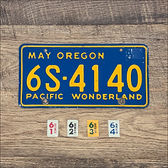
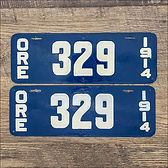
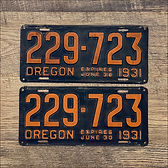
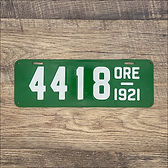
SERVICES WE OFFER
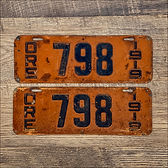
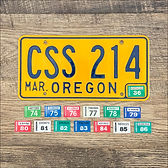
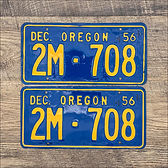
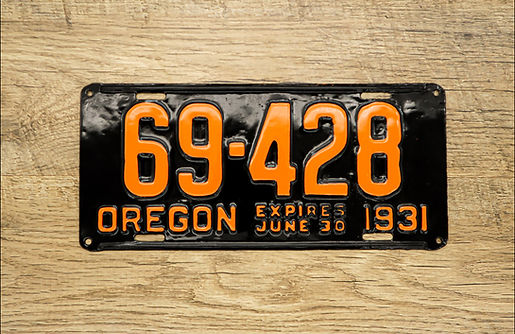
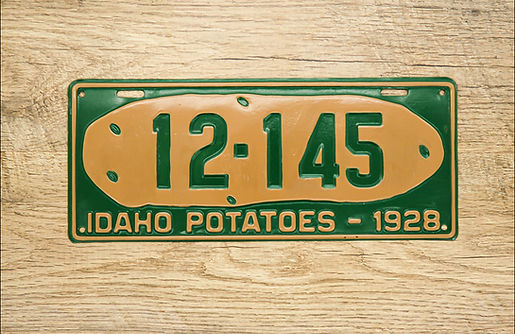
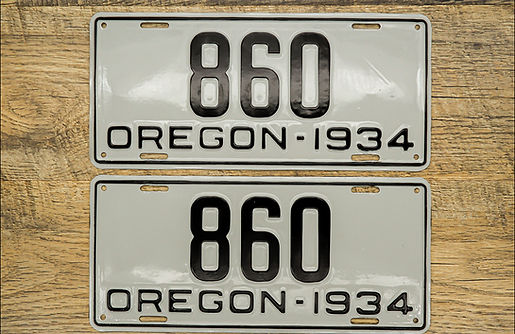
FULL LICENSE PLATE RESTORATION
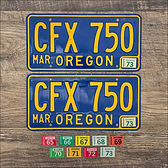
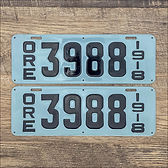
Get your old license plate restored to its former condition. Our restoration techniques remove as little original material as possible when stripping paint and rust. We take absolute care to bring a plate back to life and guarantee our color-matching to the original license plate.
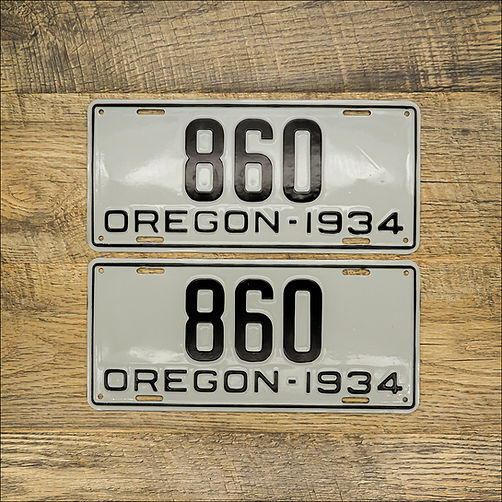
A Specialty Service for Oregon's Collector Vehicles
Oregonplates is a small, focused operation built around a single idea: a classic car should wear a plate that belongs to its era, not a modern issue with barcodes and reflective sheeting. We work with owners of antique, vintage, and collector vehicles across Oregon who want their registration paperwork and their license plates to be as correct as the rest of the car. That means year-of-manufacture plates, restored original Oregon tags, and honest guidance about what the DMV will and will not accept before you spend money. Whether you have inherited a half-finished project from a relative or you are finishing a frame-off restoration, we help you sort out the plate side of the build.
Most of our customers come to us after discovering that finding a matching pair of Oregon plates from the right year is harder than it sounds. Plates from the 1940s through the 1970s were stamped, painted, and often bent, rusted, or repainted by well-meaning owners decades ago. We source, evaluate, and restore plates so they read clearly and look correct on the car without erasing the character that makes them interesting. Where a pair cannot be found in usable condition, we explain the alternatives plainly rather than selling something that will not pass review.
We are not a DMV office and we do not pretend to be one. What we offer is practical experience with the forms, the inspections, and the small details that trip people up, gathered over years of working with collectors, restorers, and hobby clubs throughout the state.
Plates That Match the Year, Not Just the Car
Oregon has long allowed collectors to run plates from the year the vehicle was manufactured, provided the plates are authentic, legible, and properly registered to that vehicle. The appeal is obvious: a 1957 Chevrolet should not be carrying a plate designed in the 2020s. Getting there, however, requires the right pair of plates in the right condition, correct documentation, and a clear understanding of how the run is recorded. We help owners work through each of those steps in order, so nothing is submitted until the plates and the paperwork are both ready.
Restoration is where much of the craft lies. Original plates were often steel with baked enamel lettering, and many have spent decades in garages, barns, or on the back of a truck. We clean and stabilise them, straighten bends where it is safe to do so, and touch up lettering only where the original finish has already failed. The goal is a plate that looks like a well-kept original rather than a reproduction, because reviewers can usually tell the difference and collectors almost always can.
We also advise on the practical side of running vintage plates: matching front and rear pairs, correct spacing and mounting hardware, and the simple question of whether a particular plate is legal to use on a given road. If the answer is no, we say so early, before a purchase is made.
Working With Owners, Restorers, and the DMV
Our services are built around the way restoration projects actually run. A car may sit for years before it is roadworthy, and the plate question often arrives late in the process, sometimes weeks before a first show. We are happy to start early, sourcing a correct pair while the paint is still drying, or to step in at the end when a deadline is close. Restorers and shop owners use us as a resource for their customers, and hobby clubs sometimes bring us in to answer plate questions for a whole membership at once.
Paperwork is where most projects stall, so we treat it as part of the job rather than an afterthought. We help owners gather the right documents, understand what the state expects for an antique or collector registration, and prepare a clean submission the first time. When a case needs a direct conversation with the DMV, we point owners to the correct office and the correct form instead of guessing. We would rather lose a sale than send someone into a queue with the wrong paperwork.
If you are restoring an Oregon car, or bringing one back into the state after years elsewhere, tell us the year, make, and what plates you have or hope to find. A short conversation usually makes the path ahead clear, and it is the fastest way to find out whether the plate you have in mind is the plate your car can legally wear.